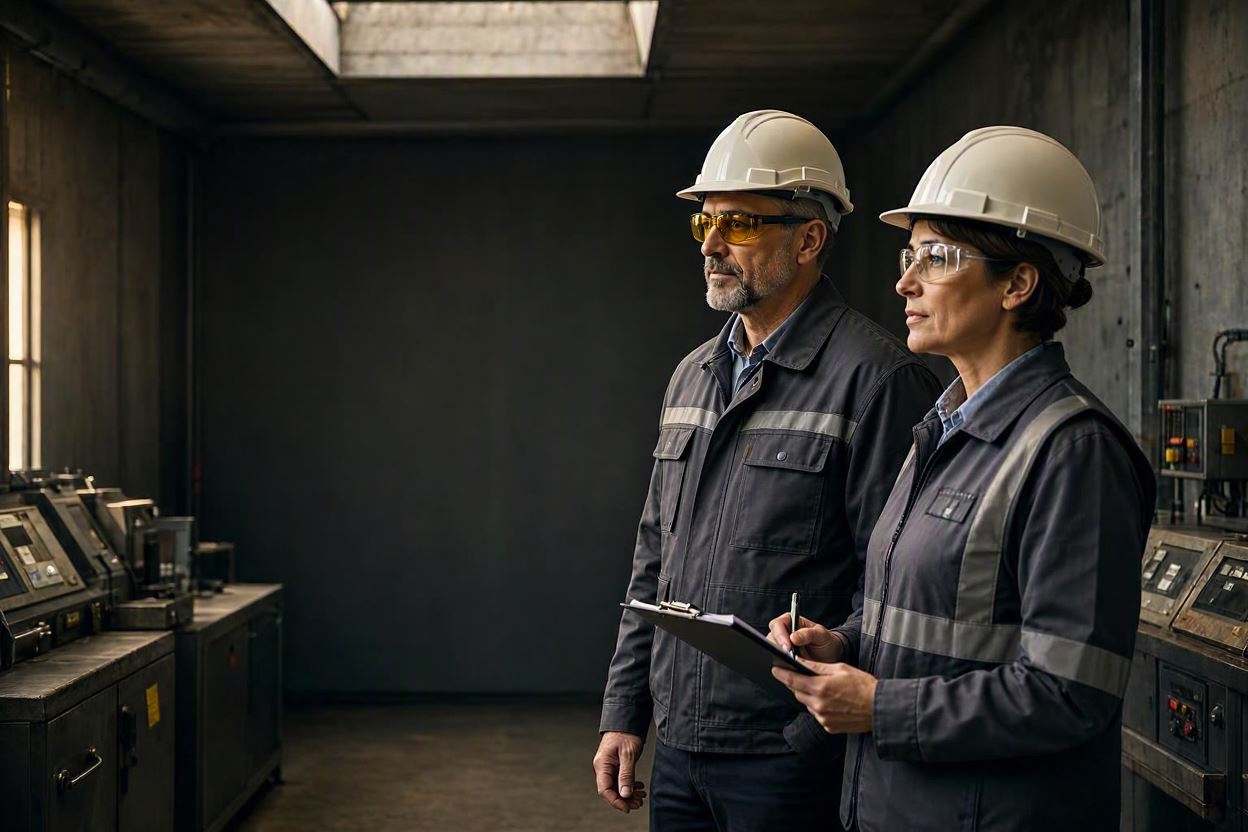
Dynamic Risk Assessment: A Practical Guide to Managing Changing Workplace Risks
Dynamic risk assessment is the ongoing process of recognizing changing hazards, reassessing occupational risk and adapting controls as work progresses. It complements planned risk assessment by helping workers respond when actual workplace conditions differ from those originally anticipated.
What Is Dynamic Risk Assessment?
Dynamic risk assessment is a continuous process of observing workplace conditions and reconsidering risk as circumstances change during an activity.
It helps workers recognize when the assumptions, hazards or controls considered during initial planning no longer reflect the actual situation.
The objective is not to replace formal risk assessment. It is to provide an additional layer of situational risk management when work is variable, uncertain or affected by changing conditions.
Dynamic Risk Assessment vs Planned Risk Assessment
Planned and dynamic assessments support the same objective but operate at different stages of work.
Planned Assessment
Identifies foreseeable hazards and establishes controls before an activity begins.
Dynamic Assessment
Continually observes actual conditions and identifies changes that can alter occupational risk during work.
Risk Review
Uses significant findings from the work to improve future assessments, procedures and controls.
Why Dynamic Risk Assessment Matters
Work does not always proceed exactly as anticipated during planning.
Weather can change, equipment can fail, access routes can become obstructed, other activities can begin nearby and unexpected hazards can emerge as a task progresses.
Dynamic risk assessment helps workers recognize these changes and determine whether the planned controls remain appropriate before continuing the activity.
When Is Dynamic Risk Assessment Important?
Ongoing reassessment is particularly useful when workplace conditions can change rapidly or cannot be completely predicted before work begins.
Changing Conditions
Weather, lighting, access, environmental conditions or surrounding activities change during the work.
Unexpected Equipment Conditions
Equipment behaves differently than expected, becomes defective or requires unplanned intervention.
New Hazards
A hazard or exposure pathway emerges that was not adequately addressed by the original assessment.
Start With a Planned Risk Assessment
Dynamic assessment should not become a substitute for reasonable preparation.
Foreseeable hazards should be identified and evaluated before work begins, with appropriate controls, responsibilities and safe work arrangements established in advance.
Dynamic assessment then helps determine whether those assumptions remain valid once workers encounter the actual conditions.
Observe the Work Environment Continuously
Dynamic risk assessment depends on awareness of what is happening around the activity.
Workers should remain alert to changes in equipment, people, environmental conditions, access, materials and interacting work that could affect the planned controls.
The purpose is to identify meaningful changes early enough to prevent exposure rather than responding only after an unsafe event occurs.
Recognize When Conditions Differ From the Plan
A useful dynamic assessment begins by comparing actual conditions with those expected during work planning.
If the environment, equipment, work sequence or people involved differ materially from the original assumptions, the risk may also have changed.
Workers should be able to recognize when a difference is significant enough to require reassessment before proceeding.
Identify Hazards That Emerge During Work
Some hazards only become visible once equipment is opened, materials are moved or work reaches a particular stage.
Dynamic risk assessment should identify the hazard source, potential exposure and people who could be affected.
Where the new hazard is not adequately controlled, work should not simply continue under the assumptions of the original assessment.
Check Whether People at Risk Have Changed
The people exposed during work may change even when the task itself remains similar.
Contractors, visitors, members of the public, maintenance personnel or other workgroups may enter an area and create different exposure conditions.
Dynamic assessment should consider whether the controls remain suitable for everyone who can now be affected.
Consider Simultaneous and Nearby Work
Activities that are individually controlled can create additional risk when they occur at the same time or in the same area.
Vehicle movement, lifting operations, hot work, maintenance and other tasks can introduce hazards for neighboring workgroups.
Workers and supervisors should consider these interactions when conditions change and coordinate controls where necessary.
Reassess Risk When Equipment Conditions Change
Unexpected equipment behavior can significantly alter occupational risk.
Alarms, damaged guards, unusual noise, leakage, loss of power, blocked materials or malfunctioning safety devices can indicate that the original control strategy is no longer reliable.
Workers should avoid improvising around safety-critical failures without an appropriate reassessment and authorization process.
Reassess Risk When Environmental Conditions Change
Environmental changes can alter exposure even when the work method remains unchanged.
Wind, rain, temperature, visibility, noise, surface conditions and other environmental factors can affect access, stability, communication and the effectiveness of controls.
Where conditions exceed what the planned assessment considered, the task should be reassessed before continuing.
Check Whether Existing Controls Still Work
A change in conditions does not always create a completely new hazard. It may instead reduce the effectiveness of an existing control.
Barriers may be moved, ventilation may become ineffective, access restrictions may break down or a procedure may no longer fit the work sequence.
Dynamic risk assessment should therefore examine whether the controls relied upon in the original assessment remain operational and suitable.
Stop, Continue or Change the Work?
A dynamic assessment should lead to a clear decision rather than simply acknowledging that conditions have changed.
If the existing controls remain effective, the work may be able to continue. If additional controls can be implemented within the worker’s authority and competence, the task may proceed after those measures are established.
If the risk cannot be adequately controlled, the appropriate decision is to stop or pause the activity and obtain further assessment, resources or authorization.
Know When Work Should Not Continue
Workers should understand the circumstances in which changed conditions require work to stop.
Examples can include failure of a safety-critical control, discovery of an uncontrolled serious hazard, conditions outside approved operating limits or a situation beyond the worker’s competence or authority to resolve.
Organizational arrangements should support appropriate escalation rather than encouraging people to continue work despite unresolved serious risk.
Apply Effective Controls to Changed Conditions
Where additional controls are required, they should address the changed hazard or exposure pathway rather than merely create additional paperwork.
Where practicable, stronger measures that eliminate, substitute or physically control the hazard should be considered before relying primarily on administrative measures or PPE.
Any temporary control should be appropriate to the risk and should not be treated as a permanent solution without suitable evaluation.
Communicate Changes to Everyone Affected
A changed risk can affect people beyond the worker who first identifies it.
Relevant changes to hazards, controls, work boundaries or operating conditions should be communicated to supervisors and affected workgroups.
Where several teams or contractors are involved, coordination is particularly important so that one group’s response does not introduce risk to another.
Define the Limits of Individual Decision-Making
Dynamic risk assessment does not mean every worker should independently redesign controls for complex or high-risk activities.
Organizations should define what decisions workers can make, when supervision is required and when specialist or management input is necessary.
Workers need sufficient competence to recognize hazards and understand when a situation exceeds their training, authority or available resources.
Dynamic Risk Assessment and Permit-to-Work Systems
Higher-risk activities may already be controlled through a permit-to-work system or other formal authorization process.
If conditions change significantly after authorization, workers should determine whether the permit remains valid under the organization’s procedures.
A dynamic assessment should not be used to bypass formal controls, isolations or authorization requirements established for high-risk work.
Do Not Improvise Around Hazardous Energy
Unexpected equipment conditions during maintenance can expose workers to electrical, mechanical, hydraulic, pneumatic, thermal or gravitational energy.
Dynamic assessment may identify the changed condition, but appropriate energy isolation and verification procedures should still be followed.
Unexpected difficulty with an isolation should trigger reassessment rather than encourage workers to bypass established energy-control measures.
Dynamic Assessment During Abnormal and Emergency Situations
Abnormal and emergency conditions can develop rapidly and may create hazards that differ significantly from normal work.
Dynamic assessment can support situational awareness, but it should operate within established emergency plans, command arrangements and individual competence.
Workers should not take uncontrolled risks simply because an urgent situation exists.
When Should Dynamic Risk Assessment Be Documented?
The level of documentation should be proportionate to the nature of the work, significance of the change and organizational requirements.
Minor adjustments within an established safe system may require little additional documentation, while significant changes to hazards or controls may require formal reassessment or revision of work authorization.
Important findings should be captured when they can improve future planning, procedures or risk assessments.
Feed Dynamic Assessment Findings Back Into Planning
If workers repeatedly encounter the same unexpected condition, it should no longer be treated as unexpected.
Recurring findings can indicate that the planned risk assessment, procedure, equipment design or work organization needs improvement.
Organizations should use this information to strengthen future planning so that predictable hazards are controlled before work begins.
Use Incidents and Near Misses to Improve Dynamic Risk Assessment
Incident investigation may show that workplace conditions changed before an event but the significance of the change was not recognized.
Near misses can provide similar evidence about weak situational awareness, unclear escalation criteria or inadequate controls.
These lessons should be incorporated into training, procedures and future risk assessments where relevant.
A Practical Dynamic Risk Assessment Process
A simple process can help workers recognize changing conditions and make proportionate decisions without replacing formal risk-management arrangements.
Observe
Look for changes in hazards, equipment, people, environment and interacting activities.
Assess
Determine how the change affects exposure, potential consequences and the effectiveness of existing controls.
Control
Apply appropriate additional measures within defined competence and authority, or stop and escalate the work.
Review
Communicate significant changes and use recurring findings to improve future planning and formal assessments.
Common Dynamic Risk Assessment Mistakes
Replacing Proper Planning
Foreseeable hazards should be assessed before work rather than being left for workers to discover and control during the task.
Exceeding Authority
Workers should not improvise complex controls or continue high-risk work beyond their competence and authorization.
Ignoring Recurring Changes
Conditions encountered repeatedly should be incorporated into formal planning rather than continually treated as unexpected.
Dynamic Risk Assessment Keeps Risk Decisions Aligned With Actual Conditions
Dynamic risk assessment helps workers recognize when real workplace conditions differ from those anticipated during planning.
Effective dynamic assessment combines situational awareness with clear decision-making, appropriate control measures and defined escalation limits. Significant findings should then feed back into formal risk management so predictable hazards are better controlled in future work.
Explore Risk & Hazard Management Resources
Continue learning about dynamic risk assessment, workplace hazard analysis, occupational risk control and practical risk management through the IOSHQ Knowledge Center.