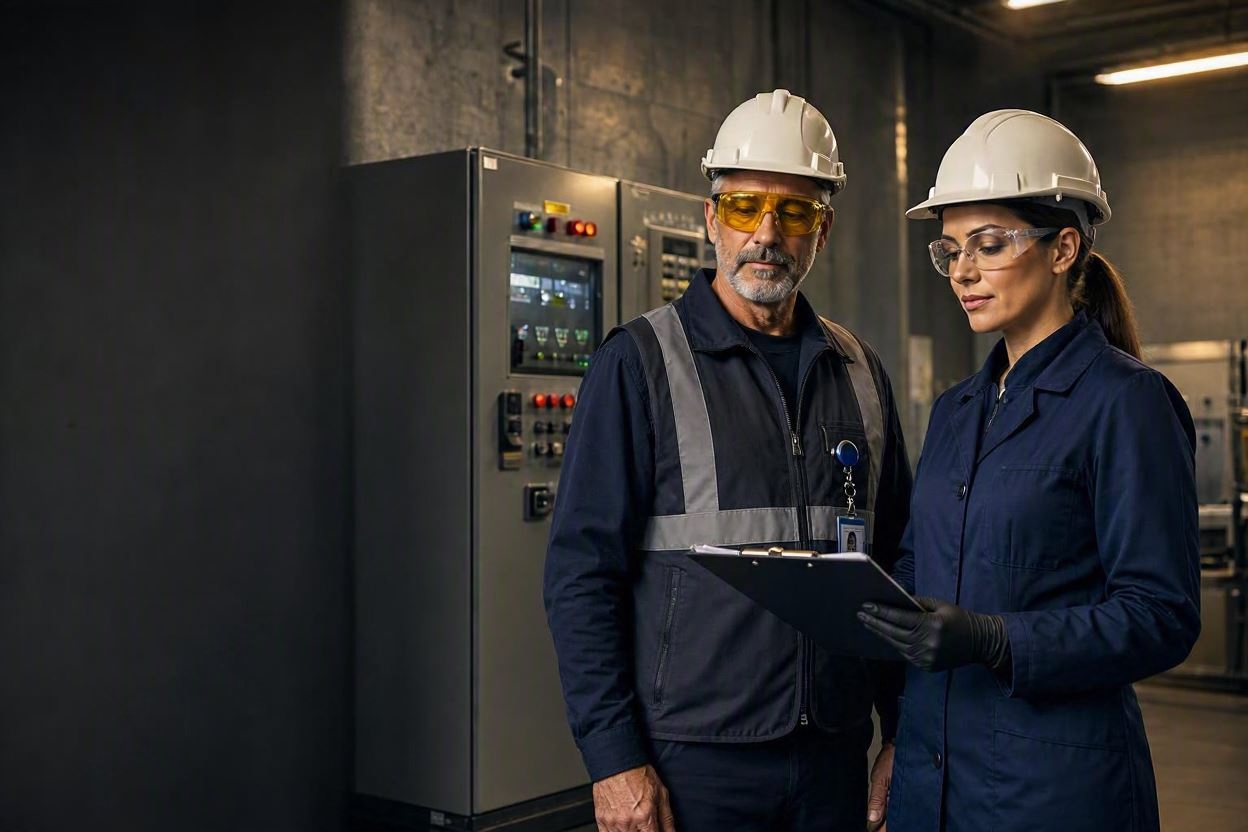
Worker Participation in Workplace Safety: A Practical Leadership Guide
Worker participation in workplace safety gives people meaningful opportunities to contribute their knowledge and experience to hazard identification, risk assessment, control decisions, reporting and improvement. Effective safety leaders create the conditions, resources and communication channels that allow participation to influence how work is managed.
What Is Worker Participation in Workplace Safety?
Worker participation means involving workers appropriately in the development, operation, evaluation and improvement of workplace safety and health arrangements.
Participation can include identifying hazards, contributing to risk assessments, developing controls, reporting concerns, participating in inspections and investigations, reviewing procedures and suggesting improvements.
The objective is not simply to collect opinions. Meaningful participation uses workplace knowledge to support better safety decisions and gives workers practical opportunities to contribute to matters affecting their work.
Why Worker Participation Matters to Safety Leadership
Leaders cannot observe every workplace condition or understand every detail of every task from management information alone.
Workers often have direct knowledge of equipment, changing conditions, recurring problems, difficult procedures and the practical performance of risk controls.
Safety leaders who create effective participation mechanisms gain access to this operational knowledge and can use it to strengthen decisions about workplace risk.
What Meaningful Worker Participation Looks Like
Workers Can Speak
People have practical channels for raising hazards, concerns, suggestions and uncertainty about workplace conditions.
Leaders Listen
Worker input is considered as relevant operational information rather than treated as a procedural formality.
Feedback Returns
Workers receive appropriate information about decisions, actions and improvements arising from the issues they raise.
Use Workers’ Knowledge of Actual Work
People performing a task may observe conditions that are difficult to identify from procedures, reports or management meetings.
They can provide information about recurring equipment problems, awkward work methods, informal adaptations, changing conditions and controls that are difficult to apply in practice.
This knowledge can help leaders understand the difference between work as planned and work as actually performed.
Involve Workers in Hazard Identification
Worker participation can strengthen hazard identification because employees are regularly exposed to the tasks, equipment and workplace conditions being assessed.
Workers can help identify routine hazards as well as problems associated with maintenance, cleaning, startup, shutdown, abnormal conditions and other non-routine activities.
Their involvement should complement inspections, technical analysis and other hazard identification methods rather than replace them.
Include Workers in Risk Assessment
Workers can contribute important information about exposure, task frequency, operating conditions and the practical effectiveness of existing controls.
Participation can also help assessors identify assumptions that do not reflect how work is actually carried out.
The extent of participation should be appropriate to the activity, the people affected and the significance of the risk.
Involve Workers in Developing Risk Controls
Workers can provide practical insight into whether proposed controls are compatible with the task and workplace conditions.
This does not mean control selection should depend solely on preference. Appropriate technical principles and the hierarchy of controls should continue to guide risk treatment.
Worker input can help identify implementation difficulties, unintended consequences and opportunities to make controls more practical without weakening their protective purpose.
Make Hazard Reporting Easy to Use
Workers need practical ways to report hazards, near misses, control failures and other safety concerns.
Reporting arrangements should be understandable and accessible to the people expected to use them. Where reporting is unnecessarily complicated, important information may be delayed or lost.
Significant reports should receive timely review and appropriate action based on the risk involved.
Remove Barriers to Raising Safety Concerns
Participation is weakened when workers believe raising a concern will be ignored, create unnecessary conflict or lead to negative consequences.
Leaders should examine whether workplace practices, incentives, communication styles or previous management responses discourage people from speaking about risk.
A useful reporting environment encourages people to provide relevant safety information and responds to concerns in a fair and proportionate manner.
Create Two-Way Safety Communication
Worker participation requires communication in both directions.
Organizations need to provide workers with relevant information about hazards, controls and changes, while workers need opportunities to communicate observations, questions and concerns upward.
Two-way communication helps leaders test whether formal safety arrangements reflect actual workplace conditions.
Give Workers Relevant Safety Information
People need appropriate information to participate meaningfully in workplace safety decisions.
Depending on the activity, this may include information about hazards, risk assessments, controls, procedures, inspection findings, changes or lessons from incidents.
Information should be communicated in a form that the intended audience can understand and use.
Provide Time and Resources for Participation
Organizations should avoid expecting meaningful participation to occur entirely outside normal work responsibilities.
Workers may need time to attend safety discussions, contribute to assessments, participate in investigations or review proposed changes.
Leadership commitment becomes more credible when participation is supported with appropriate time, information and other necessary resources.
Use Safety Meetings for Genuine Participation
Safety meetings and toolbox talks can provide opportunities for workers to discuss hazards and changing work conditions.
These discussions should not be limited to one-way delivery of prepared information. Workers should have appropriate opportunities to ask questions, identify problems and contribute practical observations.
Issues requiring action should be recorded and followed through rather than disappearing when the meeting ends.
Include Workers in Workplace Inspections
Workers can contribute practical knowledge during workplace inspections and help explain how equipment, access routes and work areas are used during normal operations.
Participation can also help inspectors identify intermittent problems or task conditions that may not be visible during a brief inspection.
Inspection findings should still be evaluated systematically and prioritized according to the associated risk.
Use Worker Knowledge During Incident Investigation
Workers familiar with the activity can help investigators understand normal work, unusual conditions, previous warning signs and practical differences between procedures and actual operations.
The investigation process should seek reliable information about what happened and why rather than using participation to assign premature blame.
Lessons from investigations should be communicated appropriately so that workers can understand resulting improvements.
Involve Workers in Reviewing Safety Procedures
People who perform a task can help identify whether procedures are understandable and consistent with workplace conditions.
Worker participation can reveal unclear steps, impractical requirements or situations not adequately addressed by the documented process.
Technical and safety requirements should remain appropriately controlled while operational knowledge is used to improve usability and accuracy.
Engage Workers When Workplace Conditions Change
Changes to equipment, processes, materials, staffing or work methods can affect the people who perform the work directly.
Worker participation during change can help identify practical hazards, training needs, control difficulties and unintended effects before implementation.
Feedback after implementation can also reveal problems that were not apparent during planning.
Consider Participation Across the Workforce
Workplace risk can involve permanent employees, temporary workers, contractors and other people working within shared operations.
Organizations should consider how relevant groups can communicate hazards and receive the information necessary to work safely.
Participation arrangements should reflect the actual workforce and interfaces between different employers rather than assuming everyone receives information through the same channels.
Make Participation Accessible
Communication and participation arrangements should consider the characteristics of the workforce.
Language, literacy, work location, shift patterns, accessibility needs and employment arrangements can affect whether people can participate effectively.
Leaders should identify and reduce practical barriers that prevent relevant workers from contributing safety information.
Close the Feedback Loop
Workers should receive appropriate feedback about significant concerns and suggestions they raise.
Not every suggestion will necessarily be adopted, but explaining decisions can demonstrate that the information was considered and help people understand the resulting control strategy.
Closing the feedback loop also allows workers to identify when a proposed solution does not resolve the original problem in practice.
Convert Worker Input Into Appropriate Action
Participation becomes ineffective when information is collected but significant issues remain unresolved.
Reported hazards and improvement opportunities should be evaluated, prioritized and assigned appropriate actions according to their significance.
Where an issue cannot be corrected immediately, relevant interim measures and communication may be necessary while a longer-term solution is developed.
Worker Participation and Safety Culture
Participation can influence how workers perceive the organization’s approach to safety.
When people can raise concerns and observe appropriate follow-through, formal safety expectations are reinforced by practical experience.
When participation exists only on paper or concerns repeatedly disappear without response, confidence in safety processes can weaken.
Leaders Remain Responsible for Decisions
Worker participation does not transfer management responsibility for controlling workplace risk.
Leaders should listen to relevant worker knowledge while ensuring decisions reflect appropriate risk assessment, technical expertise, organizational responsibilities and applicable requirements.
The objective is informed participation within an effective safety management process, not the replacement of professional or management responsibility.
Evaluate Whether Participation Is Working
Organizations can review whether workers have genuine opportunities to contribute and whether relevant information leads to appropriate consideration and action.
Useful indicators can include participation in assessments and inspections, hazard reporting, response to concerns, completion of resulting actions and worker feedback about the process.
The objective should be to understand participation quality rather than simply maximizing the number of meetings or reports.
A Practical Worker Participation Framework
Effective participation connects worker knowledge with leadership attention, risk decisions and visible follow-through.
Enable
Provide accessible channels, relevant information, time and resources that allow workers to participate meaningfully.
Listen
Gather worker knowledge about hazards, tasks, controls, changes and actual workplace conditions.
Act
Evaluate the information, prioritize significant issues and implement appropriate risk controls or other actions.
Respond & Improve
Provide feedback, verify resulting improvements and strengthen participation where barriers or weaknesses are identified.
Common Worker Participation Mistakes
Participation Without Influence
Collecting suggestions without considering them or responding to significant concerns can turn participation into a procedural exercise.
No Time to Participate
Expecting workers to contribute while providing no realistic time or access can limit the quality and breadth of participation.
Weak Follow-Through
Repeated reporting without visible evaluation or action can discourage workers from continuing to provide useful safety information.
Worker Participation in Workplace Safety Strengthens Risk Management
Worker participation in workplace safety gives organizations access to practical knowledge about hazards, tasks, controls and changing conditions.
Effective safety leaders make participation accessible, listen to relevant worker input, evaluate concerns objectively, take appropriate action and provide feedback. Participation is strongest when it forms part of normal risk management rather than being limited to occasional meetings or consultation exercises.
Explore Safety Leadership Resources
Continue learning about worker participation, safety leadership, leadership commitment and workplace risk management through the IOSHQ Knowledge Center.