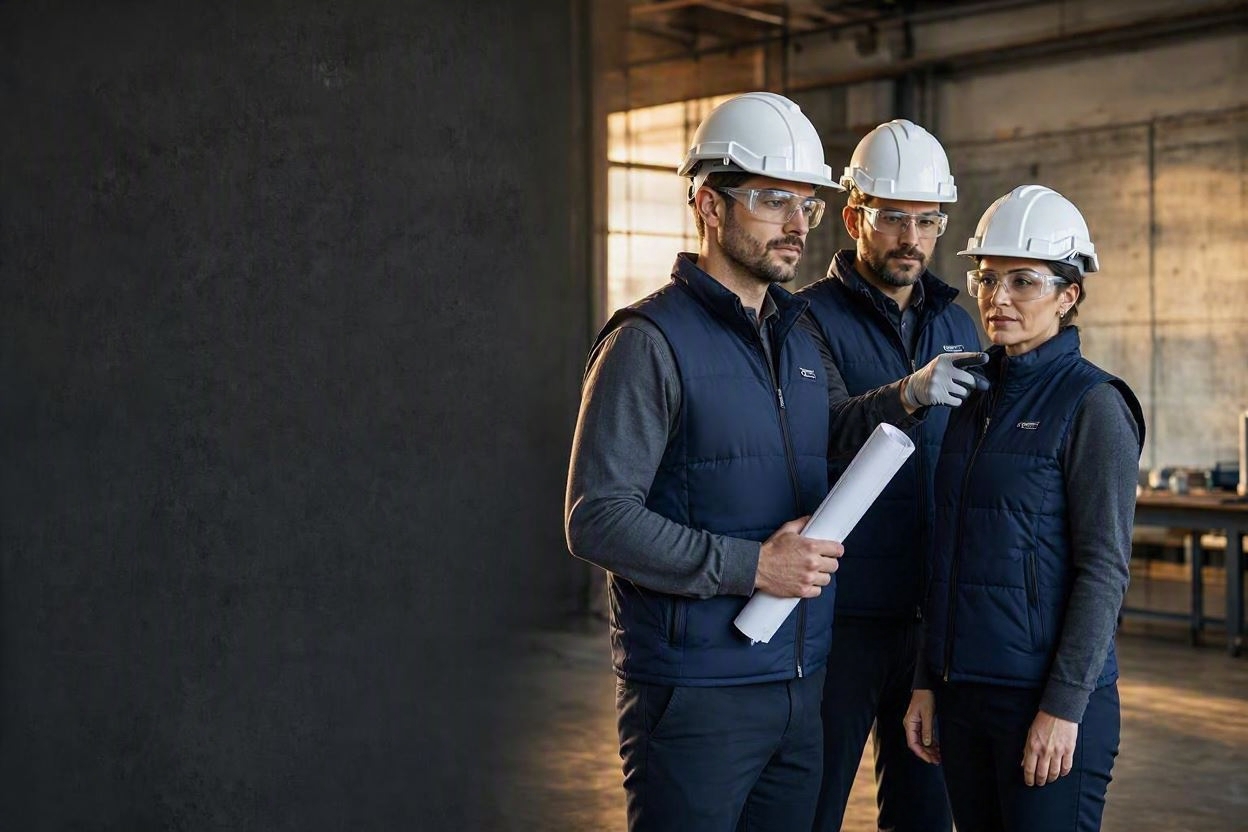
Construction Safety Training: Building Competence for Safer Work
Construction safety training helps workers develop the knowledge, skills and practical understanding needed to recognize hazards, follow safe work practices and perform assigned construction activities competently.
What Is Construction Safety Training?
Construction safety training is the structured process of providing workers with the information, instruction, knowledge and practical skills needed to perform construction work safely.
Effective training should reflect the hazards, equipment, responsibilities and working conditions that people will actually encounter.
Training is one part of a broader safety system. It should support effective planning, engineering controls, safe equipment, supervision and other measures used to prevent or control construction risks.
Construction Safety Training Should Build Competence
The purpose of training is not simply to demonstrate that a worker attended a course or signed an attendance record.
Workers should be able to understand relevant hazards, apply required controls and perform assigned activities with the level of competence required for their work.
Knowledge
Workers need to understand the hazards, precautions, procedures and limitations relevant to their construction activities.
Practical Skills
Workers performing practical tasks should be able to demonstrate the skills needed to use equipment and controls correctly.
Verification
Organizations should determine whether workers can apply what they learned under actual working conditions.
Identify Construction Safety Training Needs
Training should be based on the work people perform and the hazards they may encounter.
Organizations can consider job responsibilities, risk assessments, equipment, work methods, legal requirements, previous experience and the competence needed for particular activities.
A generic safety course should not be assumed to provide all the knowledge and skills required for every construction task.
Begin With Construction Site Induction
Site induction introduces workers to the safety arrangements and hazards relevant to a particular construction project.
Induction can address site access, emergency procedures, reporting arrangements, traffic controls, restricted areas, welfare facilities and other project-specific requirements.
Site induction should complement rather than replace task-specific instruction and training.
Train Workers to Recognize Construction Hazards
Workers should understand the hazards associated with their work and how changing site conditions can alter exposure.
Training can address how hazards are identified, reported and controlled and what workers should do when they encounter an unexpected unsafe condition.
Hazard-awareness training is strongest when it uses examples that reflect the work environment rather than relying only on abstract descriptions.
Teach Workers How Construction Risks Are Controlled
Workers benefit from understanding why particular controls are used rather than simply being instructed to follow a rule.
Training should explain how elimination, engineering or collective measures, safe systems of work and personal protective equipment contribute to controlling risk.
This helps workers recognize situations where a required control is missing, damaged or no longer suitable.
Provide Task-Specific Construction Safety Training
Workers assigned to particular activities should receive information and instruction appropriate to those activities.
Task-specific training may address equipment operation, work methods, hazards, limitations, inspections and emergency actions relevant to the job.
The level of training should reflect the complexity and risk of the work and any requirements established by the applicable jurisdiction.
Train Workers Before They Use Construction Tools
Workers should understand how to use tools and equipment correctly before being expected to operate them independently.
Training can address intended use, guarding, inspection, safe handling, energy sources, limitations and actions to take when defects are found.
Manufacturer instructions and practical demonstration can support training where appropriate.
Provide Appropriate Work-at-Height Training
Workers involved in work at height should understand the fall hazards associated with their activities and the preventive measures provided.
Training should reflect the systems and equipment workers are expected to use, including relevant access arrangements, platforms, fall protection and falling-object controls.
Specialized equipment should only be used by people with appropriate instruction and competence.
Match Scaffold Training to Worker Responsibilities
Training requirements should reflect what a person is expected to do with scaffolding.
Workers erecting, modifying or dismantling scaffolds require different competence from workers who only use completed scaffold platforms.
Users should understand relevant access, loading, platform and alteration restrictions even when they are not responsible for scaffold erection.
Train Personnel for Their Lifting Responsibilities
Crane and lifting operations can involve operators, riggers, signallers, supervisors and other workers with distinct responsibilities.
Training should reflect the person’s actual role and the equipment, communication methods and hazards associated with the operation.
Workers not involved in the lift should also understand relevant exclusion zones and restrictions where they could be affected.
Train Construction Vehicle and Equipment Operators
Operators should receive appropriate training for the vehicles or equipment they are expected to operate and for the conditions in which they will work.
Training can address equipment controls, visibility limitations, stability, inspections, safe movement and interaction with pedestrians.
Other site workers should also understand traffic arrangements and how to work safely around mobile equipment.
Match Electrical Training to the Work
Workers should receive electrical safety information appropriate to the hazards they may encounter.
General construction workers may need awareness of temporary electrical systems, damaged equipment and overhead or underground services, while specialized electrical activities require appropriately competent personnel.
Training should not authorize workers to perform electrical work beyond their competence or assigned responsibilities.
Train Workers in Correct Construction PPE Use
Where PPE is required, workers should understand why it is needed, how to use it correctly and its limitations.
Training can address fitting, compatibility, inspection, care, storage and conditions requiring replacement.
Workers should also understand that PPE does not replace stronger controls where hazards can be eliminated or controlled more effectively by other means.
Train Workers in Permit to Work Responsibilities
Personnel involved in permit-controlled work should understand their responsibilities within the project’s permit system.
Training should distinguish between requesting, issuing, accepting, supervising, suspending and closing permits where those functions apply.
Workers performing the activity should understand the permit conditions and circumstances requiring work to stop.
Train Workers for Construction Emergencies
Workers should understand the emergency procedures relevant to the construction project and their work area.
Training can include alarm recognition, evacuation, assembly arrangements, emergency reporting and actions workers should avoid.
People assigned specialized first-aid, rescue or emergency responsibilities need training appropriate to those functions.
Deliver Training in a Form Workers Understand
Safety information has little value when workers cannot understand or apply it.
Language, literacy, experience and the complexity of the subject should be considered when selecting training methods.
Written, oral, visual and participative methods can be combined where appropriate to improve understanding and practical application.
Combine Instruction With Practical Demonstration
Many construction skills cannot be adequately developed through presentation slides or written material alone.
Where appropriate, workers should have opportunities to observe correct techniques, practice relevant tasks and demonstrate that they can apply the required controls.
Practical learning is particularly important where equipment operation or physical safety procedures require specific skills.
Reinforce Training Through Construction Toolbox Talks
Toolbox talks can reinforce formal training by connecting safety principles with current tasks and changing site conditions.
They are particularly useful for discussing immediate hazards, lessons from inspections, recent changes and precautions required before work begins.
A toolbox talk should complement necessary training rather than substitute for competence requirements associated with specialized work.
Reinforce Construction Safety Training Through Supervision
Training does not eliminate the need for appropriate supervision.
Supervisors can observe whether workers apply their training correctly, identify misunderstandings and intervene when unsafe practices develop.
Observation of actual work can also identify where additional instruction, coaching or retraining may be necessary.
Verify Learning and Competence
Training effectiveness should not be measured only by attendance or completion records.
Depending on the subject, organizations can use questions, demonstrations, practical assessments, workplace observation and other suitable methods to determine whether workers have understood and can apply the required information.
Where competence cannot be demonstrated, additional instruction, practice or supervision may be needed before independent work is appropriate.
Know When Construction Safety Retraining Is Needed
Construction safety training should be reviewed when evidence suggests that existing knowledge or skills are no longer sufficient.
Retraining may be appropriate when work changes significantly, new equipment is introduced, procedures are revised or observation shows that important controls are not understood or applied correctly.
Incident and near-miss findings can also reveal gaps requiring additional instruction or competence development.
Include Contractors in Construction Training Arrangements
Contractor workers should receive the information and instruction relevant to the project while retaining the task competence required for work performed under their employer’s authority.
Projects should coordinate induction, site-specific requirements and communication of changing hazards across contractor boundaries.
Contractor status should not result in workers being excluded from safety information necessary to protect them or others on the site.
Update Training as Construction Work Changes
New project phases, equipment, materials, work methods and contractor activities can introduce hazards not covered by earlier instruction.
Training and briefings should therefore respond to significant changes rather than assuming that information provided during initial induction remains sufficient throughout the project.
Change provides an opportunity to verify whether workers need new knowledge, instruction or practical skills before affected work begins.
Evaluate Construction Safety Training Effectiveness
Training should ultimately improve workers’ ability to perform work safely.
Organizations can review workplace observations, inspection findings, assessment results, worker feedback and recurring safety problems to determine whether training is addressing the intended need.
When the same problems continue after training, management should also examine supervision, equipment, work design and other system factors rather than assuming that more training alone will solve the issue.
A Practical Construction Safety Training Process
An effective training process begins with the competence required for the work and continues through verification and improvement.
Identify
Determine the knowledge, skills and safety competence required for the worker’s responsibilities and hazards.
Train
Provide clear instruction and practical learning appropriate to the worker, task and construction environment.
Verify
Confirm understanding and practical competence through suitable assessment and observation.
Reinforce
Use supervision, toolbox talks, refresher training and lessons from actual work to maintain competence.
Common Construction Safety Training Mistakes
Completion Over Competence
A certificate or attendance record does not by itself demonstrate that a worker can perform a task safely and competently.
Generic Training
Training that ignores the actual task, equipment and site conditions may fail to prepare workers for the hazards they encounter.
Training as the Only Control
Training cannot compensate for unsafe equipment, poor work design or hazards that should be eliminated or controlled through stronger measures.
Construction Safety Training Must Translate Into Competent Work
Effective construction safety training gives workers relevant information, practical skills and an understanding of the controls required for their activities.
Training becomes most valuable when organizations verify competence, reinforce learning through supervision and adapt instruction as construction conditions, equipment and responsibilities change.
Explore Construction Safety Knowledge
Continue learning about construction hazards, risk control, worker competence and practical safety management through the IOSHQ Knowledge Center.