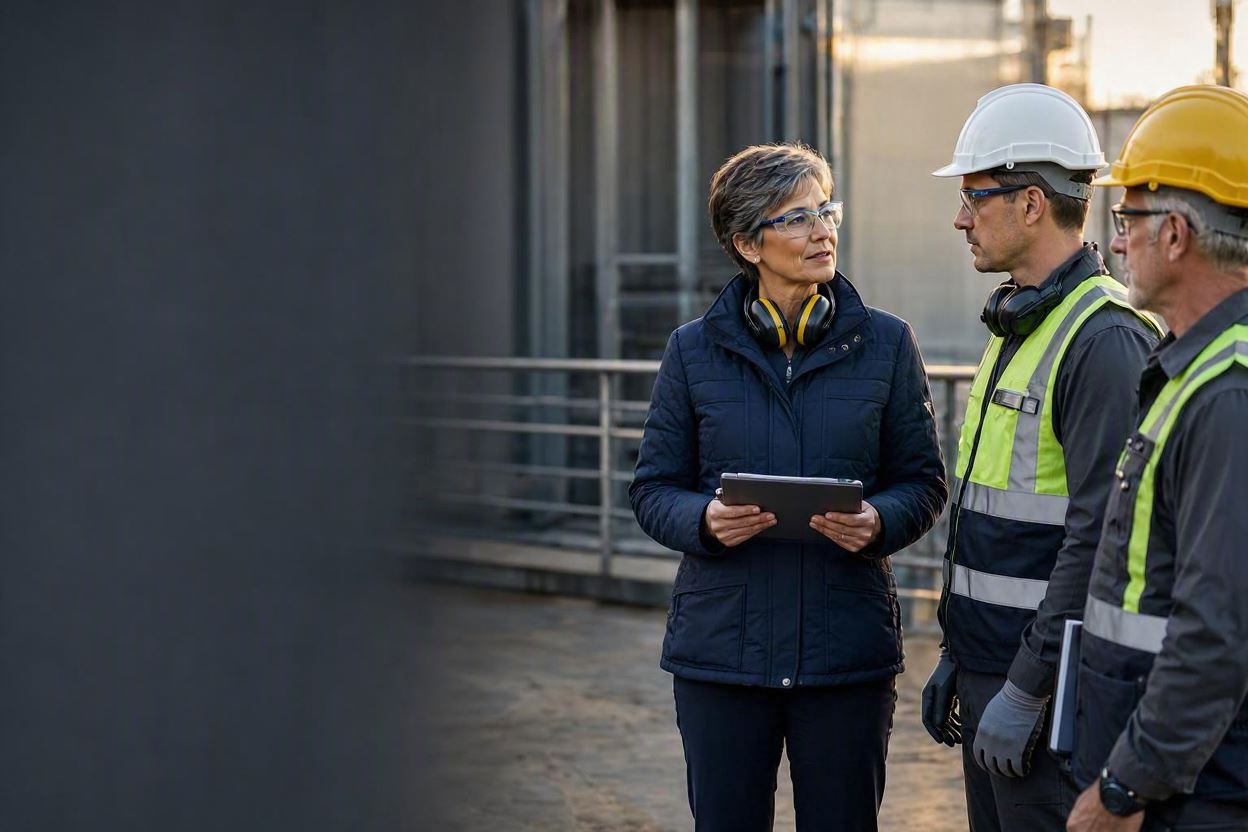
Construction Toolbox Talks: A Practical Guide to Effective Site Safety Meetings
Construction toolbox talks are short, focused safety discussions that connect workers with the hazards, controls and changing conditions relevant to the work they are about to perform.
What Are Construction Toolbox Talks?
Construction toolbox talks are brief safety discussions delivered to workers about hazards, controls and safe work practices relevant to their activities.
Unlike broad classroom training, an effective toolbox talk is closely connected to the work taking place on the site and the conditions workers are likely to encounter.
Toolbox talks can reinforce training, communicate changes and create an opportunity for workers to raise concerns before work begins.
Why Construction Toolbox Talks Matter
Construction sites change continually. Work areas, equipment, contractors, access routes and environmental conditions may be different from one shift or project phase to another.
Discuss Hazards
Focus worker attention on hazards associated with the activities and conditions they are likely to encounter.
Reinforce Controls
Confirm the precautions, equipment and safe work practices expected before the task begins.
Encourage Participation
Give workers an opportunity to identify concerns, ask questions and contribute practical knowledge about the work.
Plan Construction Toolbox Talks Around the Work
A toolbox talk should be selected because it is relevant to the work rather than simply because a topic appears next on a generic schedule.
Supervisors can consider planned activities, recent site changes, inspection findings, incidents, near misses and recurring unsafe conditions when choosing the subject.
The discussion should provide information that workers can apply to the work taking place that day or during the relevant project phase.
Make Toolbox Talks Specific to the Construction Task
Workers are more likely to understand a safety discussion when it reflects the equipment, location and activity in front of them.
A discussion about excavation, for example, should address the actual excavation conditions, access arrangements, equipment and hazards rather than only presenting general excavation principles.
Site-specific examples help connect safety information with practical decisions workers must make during the task.
Connect Toolbox Talks With Hazard Identification
Construction toolbox talks should reinforce the hazards identified through project planning, risk assessment and task-level reviews.
The discussion can explain how workers may encounter those hazards and what controls should already be in place before work begins.
Workers should also be encouraged to identify conditions that may have been missed during earlier planning.
Explain Controls, Not Just Hazards
Identifying a hazard without explaining how it will be controlled provides incomplete safety information.
Toolbox talks should describe the practical precautions workers are expected to use and why those controls matter.
Where appropriate, the discussion should confirm that required barriers, equipment, isolation, access arrangements or other controls are actually available before work starts.
Make Construction Toolbox Talks Two-Way Discussions
A toolbox talk should not become a supervisor reading a document while workers listen silently.
Workers can contribute knowledge about equipment condition, access problems, changing hazards and practical difficulties with planned controls.
Questions and worker feedback can also help the supervisor determine whether the key safety information has actually been understood.
Use Clear Language Workers Understand
Safety information is effective only when workers can understand and apply it.
Toolbox talks should use clear language appropriate to the workforce and avoid unnecessary technical terminology where simpler explanations are available.
Visual demonstrations, equipment examples, photographs or practical demonstrations can support understanding where appropriate.
Deliver Toolbox Talks at a Useful Time
Toolbox talks are most useful when workers can immediately connect the discussion with the work being planned or performed.
They may be appropriate before particular activities, after significant site changes or when observations indicate that a hazard needs renewed attention.
The frequency should reflect project conditions and organizational arrangements rather than treating attendance alone as the objective.
Use Toolbox Talks Before Work at Height
Work at height discussions can reinforce access arrangements, edge protection, platform conditions, fall-prevention controls and falling-object precautions.
The discussion should focus on the specific elevated work being performed rather than assuming that previous general training covers every changing condition.
Workers should know what changes or defects require work to stop and be reassessed.
Discuss Scaffold Conditions and Restrictions
Toolbox talks can reinforce scaffold access, platform conditions, loading restrictions and controls against falls and falling objects.
Workers should understand that unauthorized alteration of scaffold components can compromise the safety of other users.
Any identified scaffold defect should be reported and managed through the site’s established process.
Use Toolbox Talks to Reinforce Excavation Controls
Excavation conditions can change because of weather, water, nearby equipment, ground disturbance and continuing work.
A focused discussion can review access, protective systems, underground services, spoil placement and restrictions around excavation edges.
Workers should understand the warning signs and changing conditions that require reassessment.
Brief Workers Before Lifting Operations
Lifting operations may require coordination between operators, riggers, signallers, supervisors and surrounding workers.
A pre-work discussion can reinforce exclusion zones, communication arrangements, load paths and responsibilities relevant to the lift.
The briefing should complement the lift plan and other required controls rather than replace them.
Discuss Electrical Hazards Before Exposure
Construction workers should understand electrical hazards relevant to their tasks, including temporary systems, portable equipment and nearby electrical services.
A toolbox talk can reinforce isolation requirements, equipment condition and restrictions around overhead or underground electrical hazards.
Specialized electrical work should remain under the control of appropriately competent personnel.
Reinforce Construction Traffic Controls
Toolbox talks can remind workers about pedestrian routes, vehicle operating zones, reversing arrangements and equipment blind spots.
Discussions should reflect current site traffic arrangements because routes and operating areas can change as construction progresses.
Workers should understand how to approach mobile equipment safely and which areas are restricted.
Explain Task-Specific PPE Requirements
Toolbox talks provide an opportunity to confirm what protective equipment is required for the planned work and why it has been selected.
Workers should understand correct use, limitations and any compatibility considerations involving multiple items of PPE.
The discussion should reinforce that PPE supports higher-level controls rather than replacing them.
Use Toolbox Talks to Address Site Housekeeping
Blocked access, uncontrolled materials, debris and temporary services can develop quickly as construction activities progress.
A toolbox discussion can identify current housekeeping concerns and clarify responsibility for maintaining work areas.
Recurring housekeeping problems should be addressed through improved planning rather than repeated reminders alone.
Learn From Incidents and Near Misses
Relevant lessons from incidents and near misses can provide useful subjects for toolbox talks when communicated appropriately.
The objective should be to explain what conditions or controls require attention rather than assign blame to individuals.
Lessons should be translated into practical actions workers can apply to similar activities.
Use Toolbox Talks When Conditions Change
Construction work may change because of weather, equipment availability, design modifications, contractor activities or site access.
When these changes affect hazards or controls, workers should receive updated information before continuing affected activities.
A short focused discussion can help ensure that earlier instructions are not followed after the conditions on which they were based have changed.
Coordinate Toolbox Talks With Permit Conditions
Where work is controlled through a permit to work system, the toolbox discussion should be consistent with the authorized scope and precautions.
Workers should understand the permit boundaries, relevant controls and conditions that require work to stop.
A toolbox talk does not replace permit authorization, and a permit does not replace effective worker communication.
Keep Useful Toolbox Talk Records
Organizations may record toolbox talks according to project procedures and applicable requirements.
A useful record can identify the topic, date, work group and person delivering the discussion without allowing documentation to become the main objective.
An attendance sheet does not demonstrate that workers understood the information or that required controls were actually implemented.
Check Whether Toolbox Talks Are Working
The effectiveness of construction toolbox talks should be judged by worker understanding and application rather than the number of meetings delivered.
Supervisors can ask workers questions, observe work practices and review recurring inspection findings to determine whether important messages are being applied.
Repeated problems may indicate that the topic, delivery method, underlying work system or supervision needs improvement.
A Practical Construction Toolbox Talk Process
Effective toolbox talks are focused, participative and directly connected to the work.
Select
Choose a topic based on the planned task, current hazards, changes or relevant lessons from the site.
Explain
Describe the hazards, controls and expectations using clear language and site-specific examples.
Discuss
Invite workers to ask questions, identify concerns and contribute practical knowledge about the activity.
Verify
Confirm understanding and check that the discussed controls are actually implemented during the work.
Common Construction Toolbox Talk Mistakes
Reading a Generic Script
Generic material has limited value when it is not connected to the hazards and conditions workers will actually encounter.
One-Way Communication
Workers lose an important opportunity to identify hazards when the meeting does not allow questions or participation.
Focusing on Attendance
A completed attendance record does not prove that workers understood the message or applied the required controls.
Construction Toolbox Talks Should Connect Safety With Today’s Work
Effective construction toolbox talks translate hazard assessments, site conditions and safety requirements into focused discussions workers can apply to their immediate activities.
The strongest talks encourage worker participation, address actual site conditions and are followed by verification that the discussed controls are in place.
Continue Your Construction Safety Learning
Explore IOSHQ resources covering toolbox talks, construction hazards, worker training and practical site safety controls.