Healthcare PPE: A Practical Guide to Personal Protective Equipment
Healthcare PPE helps protect workers from biological, chemical and other occupational hazards when it is selected according to risk, used correctly and combined with effective engineering, environmental and work-practice controls.
What Is Healthcare PPE?
Healthcare PPE is personal protective equipment worn to reduce occupational exposure when healthcare personnel may encounter infectious material, chemicals, radiation or other hazards.
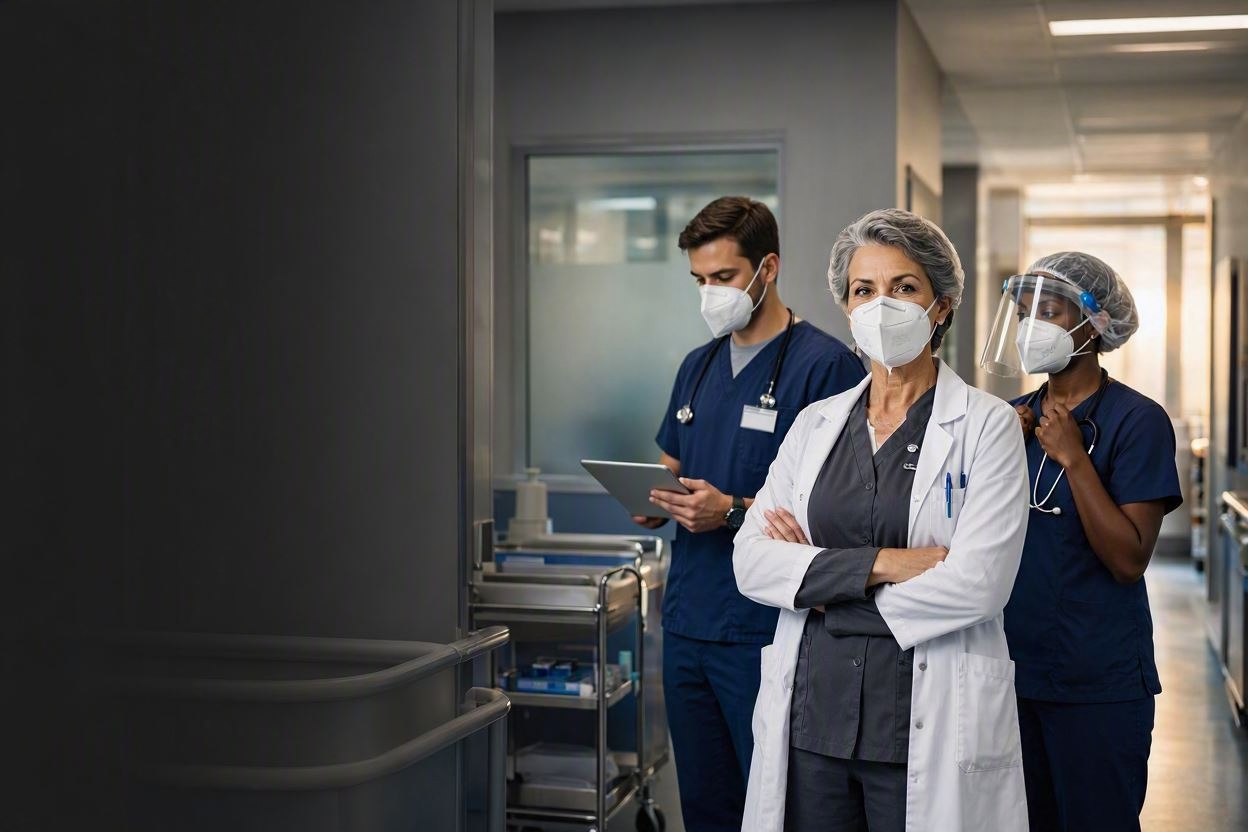
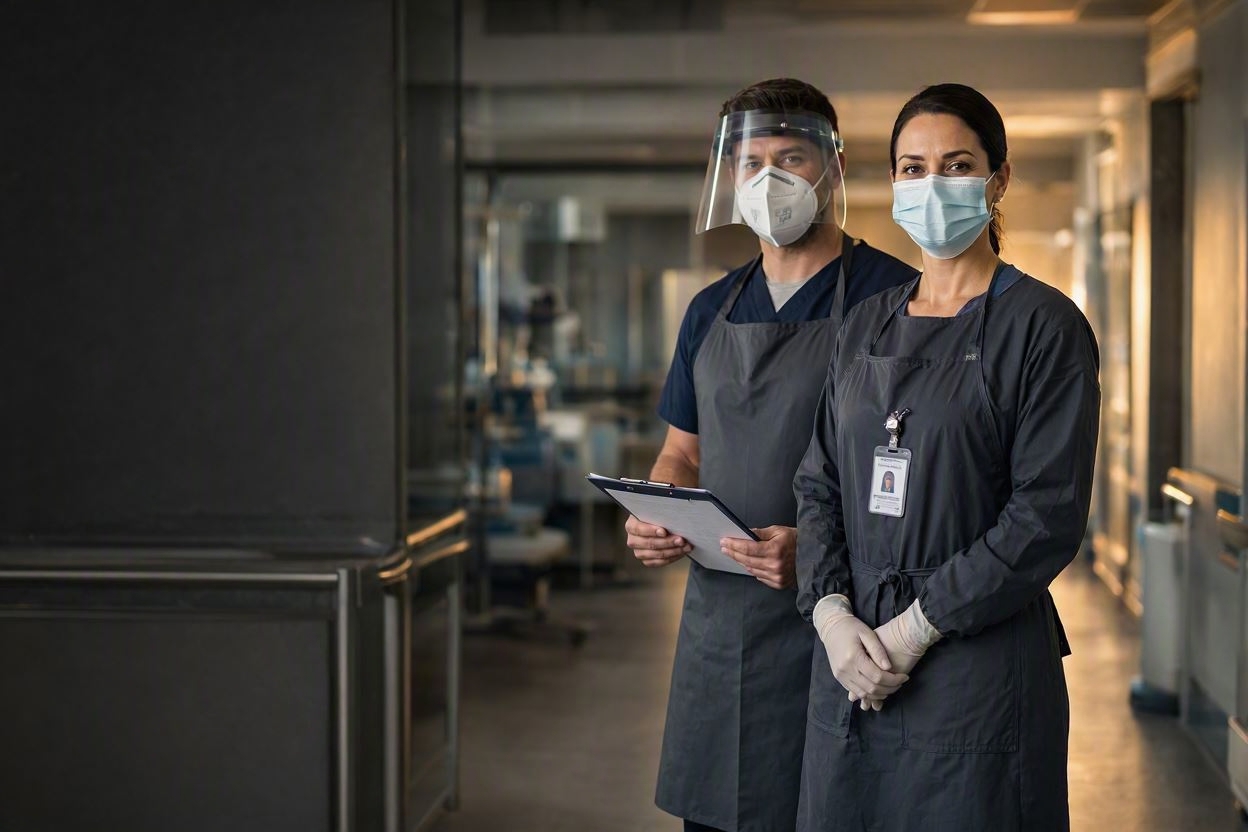
Depending on the task and hazard, PPE can include gloves, gowns and protective clothing, eye protection, face protection and respiratory protective equipment.
PPE should be selected according to the anticipated exposure and should function as part of a broader healthcare safety system rather than as the only method of controlling risk.
Select Healthcare PPE According to the Hazard
Healthcare PPE selection should begin with understanding the activity, hazard and credible route of exposure.
Personnel performing different tasks may require different combinations of protection even when working in the same healthcare environment.
Selection should consider which parts of the body may be exposed, the type and intensity of contact, duration of the task and limitations of the protective equipment.
Common Types of Healthcare PPE
The PPE required for healthcare work depends on the hazard and anticipated exposure rather than a single standard combination for every activity.
Gloves
Gloves provide a barrier for the hands when contact with blood, body fluids, contaminated materials, chemicals or other identified hazards is anticipated.
Protective Clothing
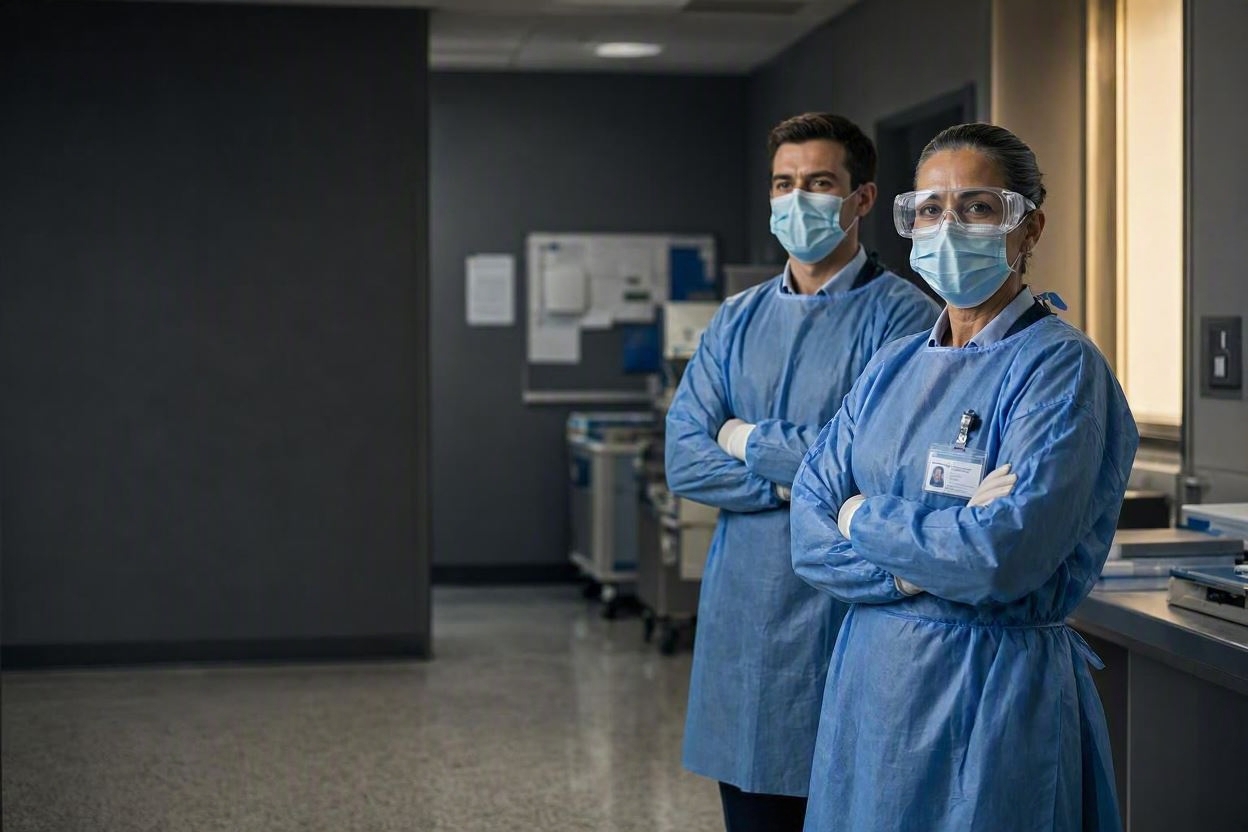
Gowns, aprons and other protective clothing can help protect skin and clothing from contamination or exposure during appropriate healthcare activities.
Face & Respiratory Protection
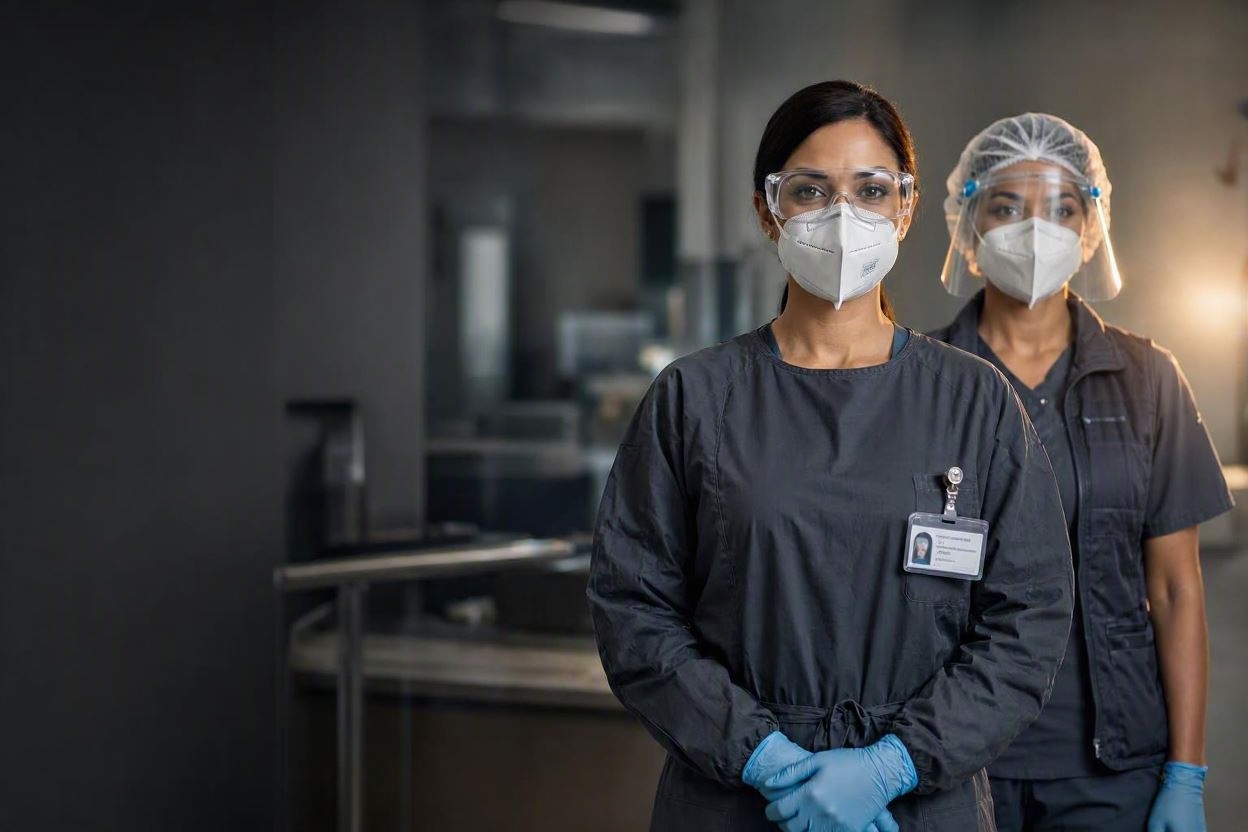
Masks, eye protection, face shields and respirators serve different protective functions and should be selected according to the exposure pathway.
Use Healthcare Gloves According to the Task
Gloves can help protect workers’ hands when contact with blood, body fluids, mucous membranes, non-intact skin, contaminated equipment or other hazardous materials is anticipated.
The glove type should be suitable for the task and hazard. Protection required for patient care may differ from protection required when handling certain chemicals or performing specialized activities.
Gloves should be changed when required by the work and should not be treated as a substitute for appropriate hand hygiene.
Select Gowns and Protective Clothing for Expected Exposure
Protective clothing can help prevent contamination of workers’ skin and clothing during healthcare activities involving blood, body fluids, infectious material, chemicals or other hazards.
Selection should consider the location and extent of anticipated exposure together with the barrier performance required for the activity.
Workers should understand that different gowns, aprons and coveralls may provide different levels and types of protection.
Protect the Eyes From Splashes and Sprays
The eyes can provide a route of exposure when healthcare procedures generate splashes, sprays or other hazardous material capable of contacting the mucous membranes.
Suitable goggles or face protection should be selected where the risk assessment identifies an eye-exposure hazard.
Ordinary eyewear should not automatically be assumed to provide the same protection as equipment designed for occupational eye protection.
Use Face Protection for Anticipated Exposure
Face shields and other protective equipment can help protect the face from splashes and sprays when selected for the relevant healthcare activity.
The equipment should provide coverage appropriate to the exposure and should not interfere unnecessarily with visibility, communication or safe task performance.
Face protection should be used in combination with other required PPE when it does not independently provide all protection needed for the identified hazard.
Understand the Difference Between Masks and Respirators
Masks and respirators are not interchangeable simply because both cover the nose and mouth.
Masks can serve functions such as protecting against certain splashes or supporting infection-control practices, depending on their design and intended use. Respirators are designed to reduce inhalation exposure to specific airborne hazards when properly selected and used.
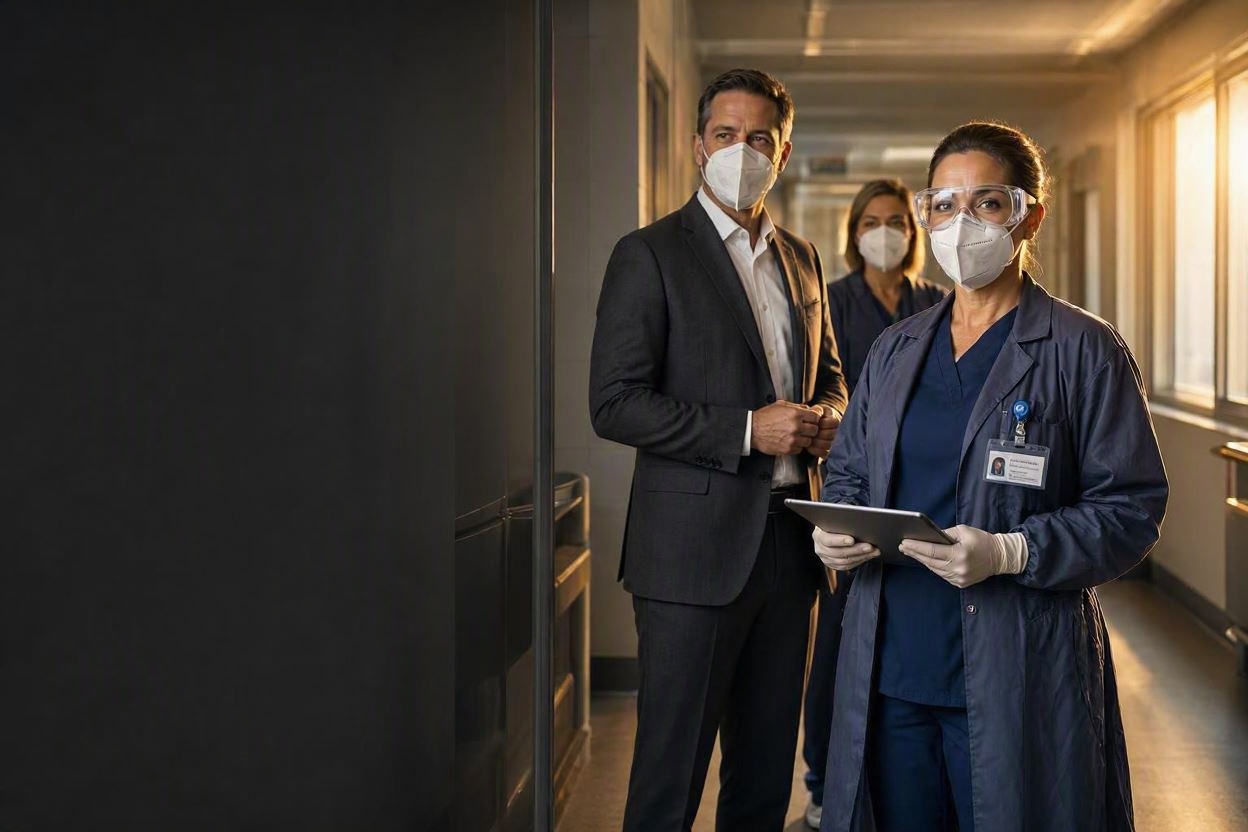
Where respiratory protection is required, the respirator should be appropriate for the identified hazard and incorporated into an effective respiratory-protection program.
Manage Respirator Use as a Protective System
Effective respiratory protection involves more than distributing respirators to workers.
The program should address hazard assessment, respirator selection, appropriate fit, worker instruction, use, maintenance or disposal and other requirements applicable to the equipment and jurisdiction.
Workers should understand both the protection provided and the limitations of the respirator they use.
Ensure PPE Fits the Healthcare Worker
PPE should fit the wearer well enough to provide its intended protection without creating unnecessary interference with safe work.
Poorly fitting gloves, gowns, eye protection or respiratory equipment can reduce protection, restrict movement or encourage repeated adjustment during the task.
Healthcare organizations should consider the range of sizes and designs needed by the workforce rather than assuming one configuration will suit everyone.
Put On Healthcare PPE Correctly
PPE should be put on before exposure begins and in a manner that establishes the required protective barriers for the task.
The appropriate sequence can depend on the PPE combination and procedure being performed. Workers should follow the established method applicable to their workplace and equipment.
Before beginning the activity, personnel should confirm that required PPE is correctly positioned and that obvious defects or fit problems are addressed.
Remove PPE Without Creating Additional Exposure
PPE removal can create contamination risk because the outer surfaces of protective equipment may contain hazardous or infectious material.
Workers should remove PPE using the established sequence and technique intended to reduce contact between contaminated surfaces and skin, clothing or the surrounding environment.
Hand hygiene should be integrated into the removal process according to applicable infection-prevention procedures.
Integrate Healthcare PPE With Infection Prevention
PPE is one component of infection prevention and control and should be used together with measures such as hand hygiene, environmental controls, safe equipment practices and appropriate patient-care precautions.
The required PPE depends on the anticipated interaction and transmission pathway rather than the presence of infection alone.
Healthcare workers should understand when PPE is required, which equipment is appropriate and when it should be changed or removed.
Do Not Rely on PPE to Prevent Sharps Injuries
Gloves can provide a barrier against contact with blood and body fluids, but they should not be treated as the primary control for puncture hazards from needles and other medical sharps.
Sharps safety should prioritize elimination where possible, safety-engineered devices, controlled handling and immediate disposal.
PPE then forms an additional protective layer for other anticipated exposures associated with the procedure.
Select PPE for Healthcare Chemical Exposure
Healthcare workers may handle disinfectants, sterilants, laboratory reagents, hazardous drugs and other chemicals requiring protective equipment.
PPE suitable for biological exposure should not automatically be assumed to provide adequate chemical protection.
Selection should consider the chemical, concentration, exposure route, task, material compatibility and available safety information.
Use Specialized PPE for Radiation Hazards Where Required
Some healthcare activities involving radiation may require specialized protective equipment as one part of a broader radiation-safety system.
The appropriate controls depend on the radiation source, procedure, exposure conditions and applicable professional or regulatory requirements.
Specialized PPE should complement engineering, procedural and exposure-control measures rather than replace them.
Use Healthcare PPE Within the Hierarchy of Controls
PPE is essential for many healthcare activities, but it remains dependent on correct selection, availability, fit and worker use.
Engineering controls, environmental measures and safer work systems can reduce exposure before it reaches the worker and should be considered wherever appropriate.
Healthcare safety is strongest when several effective controls work together rather than placing the entire burden of protection on PPE.
Make Appropriate PPE Available Where It Is Needed
Workers cannot reliably follow PPE requirements when suitable equipment is unavailable or difficult to access at the point of care.
Healthcare organizations should consider anticipated demand, workplace locations, sizes, replacement needs and credible emergency requirements when planning PPE availability.
Storage arrangements should protect equipment from damage or contamination before use.
Check PPE Before Use
Healthcare personnel should recognize obvious damage, contamination, deterioration or other conditions that could affect protective performance.
Reusable equipment should be maintained and inspected according to the applicable procedures and manufacturer’s instructions.
Defective protective equipment should be removed from service rather than used simply because replacement equipment is inconvenient to obtain.
Manage Used Healthcare PPE Safely
Disposable and reusable PPE require different handling after use.
Disposable equipment should be discarded through the appropriate waste system after its intended use. Reusable equipment should be contained, cleaned, disinfected, maintained or otherwise reprocessed according to the equipment and applicable procedures.
Used PPE should be managed in ways that minimize unnecessary contact with potentially contaminated surfaces.
Train Healthcare Workers in PPE Selection and Use
Workers should understand why particular PPE is required, when to use it and what protection it can and cannot provide.
Training should cover selection, correct use, limitations, donning, removal, disposal and relevant procedures for reusable equipment.
Practical demonstration is particularly important where correct fit or removal technique affects the level of protection.
Verify PPE Competence in Practice
Attendance at training does not necessarily demonstrate that a worker can select, put on, use and remove PPE correctly.
Where PPE use is safety-critical, organizations should consider practical observation or other suitable methods for verifying competence.
Additional instruction may be required when new equipment is introduced or workplace observations identify incorrect practices.
Reinforce Correct PPE Practices Through Supervision
Supervisors and clinical leaders can help identify situations where PPE requirements are unclear, impractical or inconsistently followed.
Observed problems should be examined for underlying causes such as equipment availability, fit, workflow, training or poorly designed procedures.
Effective supervision supports correction and learning rather than relying solely on reminders to follow the rules.
Review PPE After Occupational Exposure Incidents
An occupational exposure can reveal that PPE was absent, unsuitable, incorrectly used or insufficient for the hazard involved.
Investigation should examine the entire control system, including hazard assessment, equipment selection, availability, work practices and training.
Findings should be used to strengthen prevention rather than assuming the event occurred only because the worker made an error.
Include Healthcare PPE in Workplace Inspections
Inspections can verify whether appropriate PPE is available, correctly stored and accessible in the locations where exposure can occur.
Inspectors can also observe whether the PPE used during actual work matches established risk controls.
Recurring PPE problems should be investigated for systemic causes rather than treated only as isolated worker behavior.
A Practical Healthcare PPE Management Process
Effective healthcare PPE management connects hazard assessment, equipment selection, worker competence and verification.
Assess
Identify the hazard, exposure pathway, affected body areas and healthcare activity being performed.
Select
Choose PPE with the protective characteristics, fit and compatibility required for the identified exposure.
Use
Ensure personnel can correctly put on, wear, remove, dispose of or reprocess the selected equipment.
Verify
Observe PPE practices, investigate exposure events and improve selection or procedures when conditions change.
Common Healthcare PPE Mistakes
One PPE Set for Every Task
PPE should reflect the hazard and anticipated exposure rather than applying the same combination to every healthcare activity.
Overreliance on PPE
PPE should complement engineering, environmental and work-practice controls instead of replacing more effective exposure reduction.
Unsafe Removal
Incorrect removal can transfer contamination from protective equipment to the worker, clothing or surrounding environment.
Healthcare PPE Must Match the Hazard and the Task
Effective healthcare PPE starts with understanding the exposure rather than selecting equipment by habit. Gloves, protective clothing, eye and face protection and respirators serve different purposes and should be selected according to the hazard and healthcare activity.
PPE provides stronger protection when healthcare organizations combine correct selection with availability, fit, training, safe removal and more effective controls that reduce exposure before it reaches the worker.
Continue Your Healthcare Safety Learning
Explore IOSHQ resources covering healthcare PPE, infection prevention, occupational hazards and practical worker protection.